
Cleveland, OH and Greater Cleveland
Deck Repair in Cleveland, OH
Boards that have gone soft, a frame that springs, a guard that shifts the moment you lean on it. We establish what is genuinely failing, tell you whether repair or replacement is the sounder spend, and correct it properly.
- Footings below the frost line
- Permits and inspections handled
- Written scope before we start
Cleveland Custom Decks repairs decks across Cleveland and Greater Cleveland, from a handful of soft boards to a full structural rebuild starting at the footings. The assessment is plain spoken: what is actually wrong, what it will cost to fix properly, and whether repair is even the right call.
A deck rarely fails all at once. It fails one detail at a time, usually the same handful of details, and recognising which one you are looking at is most of the job before a single board is pulled up.
What we find most often
Decayed or split decking boards
The most visible failure and often the least serious, provided the frame underneath is sound. Boards that flex, feel soft or show dark staining have usually taken on water from above, below or both, and swapping them is straightforward once the cause is addressed rather than simply repeated.
Ledger and flashing failure
Where the deck meets the house, a nailed connection or missing flashing lets water travel into the rim joist and the floor structure beyond it. This is the repair most likely to be worse than it looks from above, because the damage is often indoors before it becomes visible outdoors.
Heaved or settled footings
Cuyahoga County’s lake plain clay expands and contracts with moisture and temperature more than sandier soil does, and a shallow pier or surface block set above the frost line moves with it. A deck that has developed a visible lean, or where the boards have separated unevenly from the house, is frequently a footing problem rather than a board problem.
Loose or non compliant railings
Railings screwed down through the decking rather than bolted into the frame work loose over time and fail the load test a proper connection is designed to pass. This is the repair category we treat with the most urgency, since it sits closest to an actual injury.
Stair failures
An uneven rise between steps, a stringer that has begun to split, or railings that were never returned to a proper post. Falls on stairs happen more from an uneven rise than from any other single cause, which makes this a repair worth acting on quickly rather than living with.
How we assess a repair
We get underneath before we quote
Every repair estimate starts below the deck, not above it. We check post condition at the base, beam and joist condition, the ledger connection and flashing, and footing condition, because those decide whether repair genuinely solves the problem or simply delays a larger one.
We separate what is cosmetic from what is structural
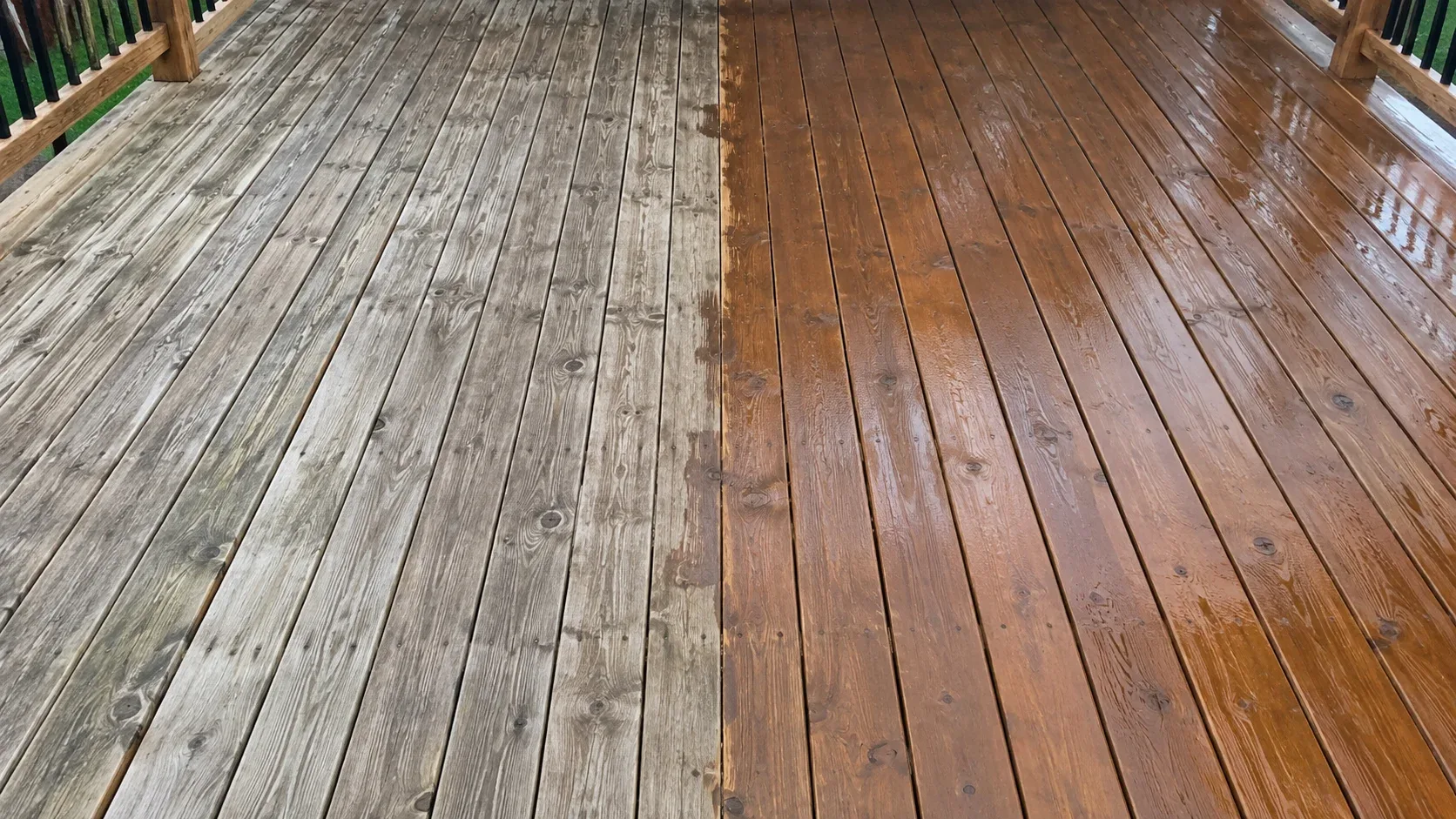
A faded, silvered board is a cosmetic problem solved by staining and sealing or replacement boards. A soft joist or a heaved footing is structural and has to be corrected to code, regardless of how the surface above it looks.
We tell you the honest ratio
If the frame is sound, new decking and railings over it commonly costs around a third of a full rebuild and can add another fifteen years of service. If the frame has failed, spending on new boards over it is money that still has to come back out later, and we say that plainly rather than letting a customer spend twice.
Repairs that need a permit
Structural work
Replacing a ledger connection, footings, posts, beams or joists is structural work and needs the same permit and inspection as new construction, through whichever office covers your address, whether that is the City of Cleveland’s Department of Building and Housing or a suburb’s own building department.
Surface level work
Board and railing replacement that does not touch the structure typically does not need a fresh permit, though we confirm this against your specific address and the scope of work before starting, since the rule varies by jurisdiction across the communities we serve.
What we do not recommend
Painting over rot
A coat of solid stain or paint can hide decay for a season, which is exactly why it is a bad idea. It buys time at the cost of making the actual damage harder to see until it has spread further.
Sistering a failed ledger without checking behind it
Adding lumber alongside a failed ledger connection without opening the wall to check for water damage behind it treats the symptom and leaves the cause in place. We open it, look, and repair what is actually there.
Repair versus full replacement
When a repair assessment turns up frame level failure throughout, the honest recommendation moves to the deck replacement page, which covers removal, disposal and a rebuild from fresh footings. We never quote a repair we do not believe will genuinely hold.
Deck cost in Cleveland, OH
Plug in the dimensions and finish to see the installed cost range, no phone call required.
Why homeowners pick Cleveland Custom Decks
Footings below the frost line
Cuyahoga County ground freezes and thaws through a long lake effect winter. Every post we set lands on a poured footing below the local frost depth, which is what keeps a deck level through a decade of heave and thaw.
Permits and inspections handled
We work out which department your address answers to, pull the permit, meet the inspector and hand you the signed card. An unpermitted deck becomes your problem the day you sell the house.
Written scope before we start
Materials, framing spec, hardware, timeline and price in writing before anybody swings a hammer. No verbal change orders.
Deck Repair questions we get asked
How do I know if my deck needs repair or full replacement?
We get underneath it, which is the only honest way to answer this. If the posts, beams, joists and ledger are sound and only the surface and railings have failed, repair usually runs about a third the cost of a rebuild. If the ledger was nailed instead of bolted, a beam has rotted, or footings have heaved out of position, those are frame level problems that repair cannot fix, and we say so before any money changes hands.
What is the most common deck failure you see in Cleveland?
Surface footings, the concrete blocks or shallow pads set on top of the ground rather than below the frost line. Cuyahoga County's lake plain clay traps water and heaves through repeated winter freeze and thaw cycles, and a block sitting above the frost depth moves a little more each year until the deck is visibly out of level. The fix is a real poured footing set below the frost line, which is around 42 inches under Cleveland's own building code.
Why did my ledger board fail?
Almost always one of two things: it was nailed rather than through bolted or structurally screwed, or the flashing behind it failed and let water travel into the rim joist. Once water is inside the floor structure, the visible symptom, a soft spot or a sagging corner, often shows up long after the actual damage began, so a repair here usually means opening the wall to check how far the rot has spread before closing it back up.
Are loose or wobbly railings dangerous?
Yes, more than most homeowners assume. A code compliant railing is anchored into the frame itself, not just screwed down through the surface boards, and it has to resist a meaningful lateral load without failing. A railing that shifts when you lean on it has already failed that test, and it is the repair we treat as urgent rather than scheduled, since it is directly tied to a fall risk.
Can repairs be done in winter?
Structural repair involving new concrete generally waits for ground that is not frozen solid, but surface level work, boards, railings and stair treads, can often proceed through a Cleveland winter provided the temperature allows fasteners and finishes to cure properly. We tell you plainly at the assessment which category your repair falls into.