
Cleveland, OH and Greater Cleveland
Deck Staining and Sealing in Cleveland, OH
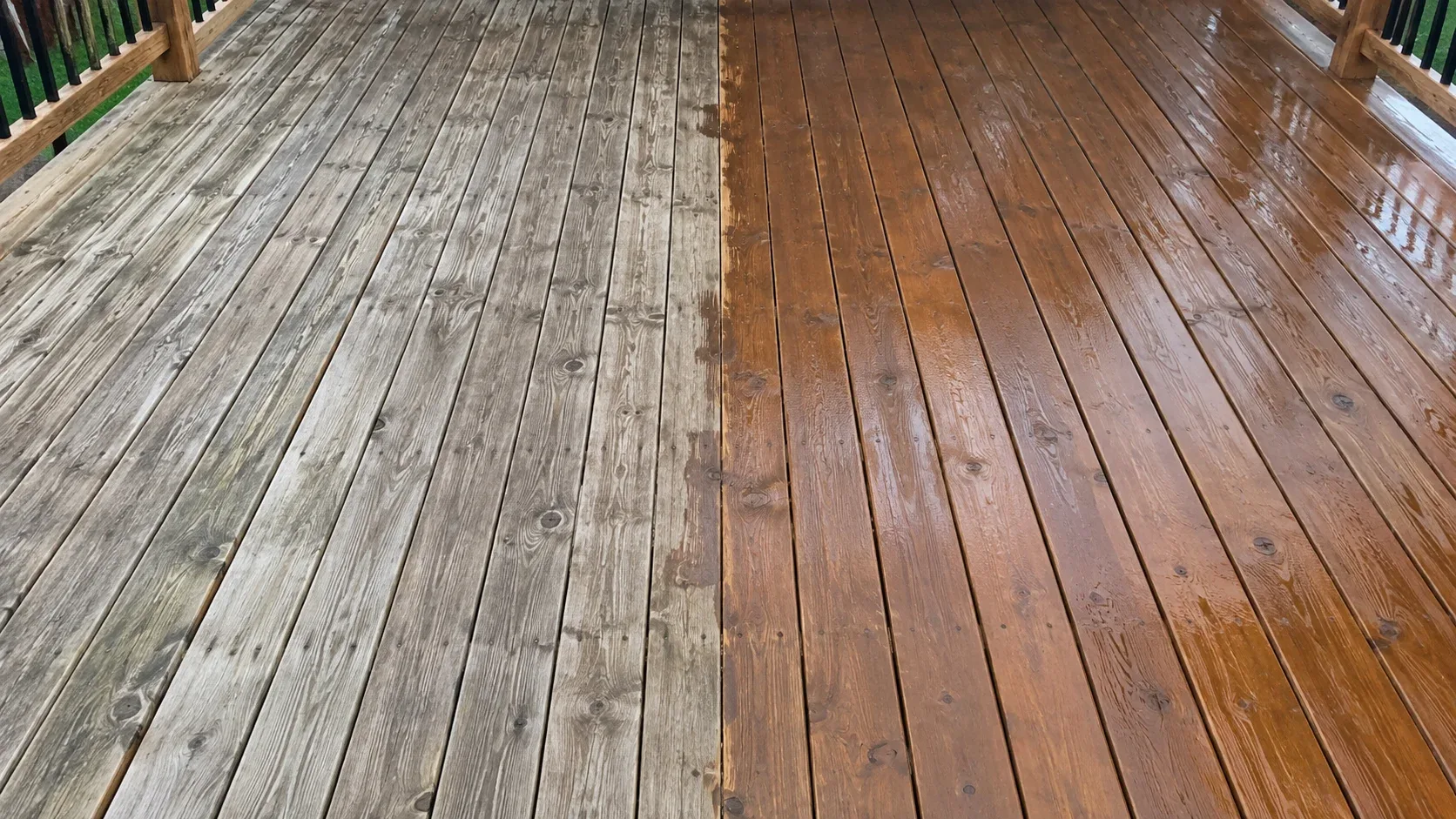
Cleaning, brightening, sanding where the boards need it, then a penetrating finish built to survive a Cuyahoga County winter. The least costly way to keep a timber deck alive.
- Footings below the frost line
- Permits and inspections handled
- Written scope before we start
Cleveland Custom Decks cleans, sands and seals timber decks across Cleveland and Greater Cleveland, on the two to three year cycle that actually keeps a wood surface alive through this climate rather than letting it silver and split.
Staining and sealing is the least glamorous line item on any deck estimate, and also the one most directly responsible for whether a timber deck lasts fifteen years or eight. A Cuyahoga County winter is not gentle on bare wood.
Why this cycle matters here
Freeze and thaw work on exposed grain the same way they work on a footing
Wood left unsealed absorbs moisture, and every freeze and thaw cycle through the winter expands and contracts that moisture inside the grain. Over a season or two the surface fibres begin to lift, crack and cup, which is exactly what an intact sealer or stain film is designed to prevent by keeping the water out in the first place.
Rain in every month of the year
Cleveland sees measurable rainfall across all twelve months, so there is no long dry season for an unsealed deck to recover in the way there might be in a drier climate. That is part of why the two to three year cycle here runs shorter than the four or five year interval sometimes quoted for wood decks in more arid regions.
Every visit covers three steps
A proper wash first
We clean with a wood specific solution at low pressure, then follow it with a brightener that undoes the grey, weathered cast sun exposure leaves behind and brings the timber’s natural colour back before any finish touches it. Cranking up the pressure instead of using the right chemistry tears open softwood’s surface fibres rather than actually cleaning them, so we stay away from that shortcut entirely.
Sanding only where it is actually needed
Boards that have gone rough or heavily weathered get sanded smooth so splinters disappear and the grain opens enough for a new coat to actually soak in, rather than beading uselessly on a compacted, sun baked surface that will not accept it.
A finish that soaks in rather than sitting on top
We stick to penetrating oil based stains and sealers, never film forming products. A penetrating finish works its way into the wood fibre and wears down gradually and evenly. A film just sits on the surface, and once Cleveland’s freeze and thaw cycle gets to it, that film cracks and peels rather than aging gracefully.
Picking the right finish for the job
Clear sealer
Blocks water effectively with almost no colour change, but does little against UV, so the board still fades to grey over time, only at a slower pace than leaving it completely bare.
Semi transparent stain
Contains real pigment that actively blocks UV, so the colour holds up considerably longer than a clear sealer while the wood grain still shows through underneath it. This is what we recommend most often, since it strikes the best balance between looking like real wood and actually protecting it.
Solid colour stain
Closer to paint than a stain, covering the grain entirely while offering the strongest UV protection of the three options, at the cost of losing that natural wood look for good.
When staining alone will not fix it
A finish that has already failed as a film
Once a film forming product has cracked and started lifting, there is no shortcut: it needs a full chemical strip and neutralising pass before any new penetrating finish can go on, which is the most labour heavy job in this category and entirely preventable by starting with the right product in the first place.
Finding real damage underneath
If sanding and washing turn up soft spots or decay in the boards, the job stops being a finishing question and becomes a deck repair question instead, since no amount of stain fixes a structural problem hiding under a tired surface.
Worth doing alongside other work
We frequently combine this with railing refinishing in the same visit, since railings weather on roughly the same timeline as the deck surface itself, and covering both in one site visit with the same equipment keeps the combined price lower than booking two separate appointments.
What actually shortens a finish’s life here
South and west facing decks work harder
A deck catching afternoon sun through the summer takes noticeably more UV exposure than one shaded by the house or mature trees, and that alone can shave a year or more off how long a given coat holds its colour. We factor orientation into how often we recommend coming back, not just the calendar.
Ravine and lakefront humidity
Homes near Cleveland’s ravines and anywhere close to Lake Erie itself tend to hold humidity longer after a storm than an open, breezy lot does, and timber that stays damp longer breaks a finish down faster regardless of how well it was applied originally. On those properties we lean toward the earlier end of the two to three year window rather than the later end.
Deck cost in Cleveland, OH
Plug in the dimensions and finish to see the installed cost range, no phone call required.
Why homeowners pick Cleveland Custom Decks
Footings below the frost line
Cuyahoga County ground freezes and thaws through a long lake effect winter. Every post we set lands on a poured footing below the local frost depth, which is what keeps a deck level through a decade of heave and thaw.
Permits and inspections handled
We work out which department your address answers to, pull the permit, meet the inspector and hand you the signed card. An unpermitted deck becomes your problem the day you sell the house.
Written scope before we start
Materials, framing spec, hardware, timeline and price in writing before anybody swings a hammer. No verbal change orders.
Deck Staining and Sealing questions we get asked
How often does a deck actually need resealing in Cleveland?
Plan on every two to three years for the horizontal walking surface. Railings and other vertical faces tend to go longer between coats since they shed rain more easily and see less direct sun. A deck facing south or west, or anywhere that holds onto Lake Erie's humidity for most of the year, should lean toward the shorter end of that range. There is a simple way to check yourself: splash a little water on the boards, and if it soaks straight in instead of forming beads, the finish has already given out and the wood underneath is absorbing moisture.
Can a brand new deck be sealed right away?
No, and rushing this step is one of the more common mistakes we see homeowners make on their own. Pressure treated lumber leaves the mill still carrying moisture from the treatment process, and sealing over that traps it in and shortens the life of the finish considerably. We generally hold off for two to four months, checking with a water test before putting anything on the boards. Cedar and kiln dried lumber dry out faster and can often take a finish sooner.
What actually separates a sealer from a stain?
A clear sealer blocks moisture well but does almost nothing to stop UV damage, so the wood still fades to grey, just more gradually than if left bare. A semi transparent stain adds pigment, and that pigment is specifically what fights UV, which is why the colour holds so much longer. A solid stain goes further still, behaving essentially like paint and covering the grain entirely. For this climate, semi transparent is where most homeowners land, and where we usually steer people.
Why has my deck's finish started peeling?
In almost every case, it comes down to one of two things: a film forming product went on in the first place, or it was applied over a surface that was still damp or not properly cleaned. A film sits on top of the wood rather than in it, and it simply cannot flex with the timber through Cleveland's freeze and thaw cycles, so it eventually cracks and lifts away. A penetrating oil finish avoids this entirely, wearing down gradually instead of peeling. Stripping a failed film is the priciest job we do in this category, and it is entirely preventable with the right product choice from day one.
Do you use a pressure washer on decks?
We keep the pressure low and let the cleaning solution handle the actual work rather than relying on water force. Blasting softwood at high pressure tears open the surface fibres, leaving the deck feeling rough and prone to shedding splinters afterward. If a wash alone will not get a deck clean, the real answer is sanding, not more pressure, and we will tell you that plainly rather than reach for the wrong tool.
Is it possible to stain a composite deck?
Capped composite neither needs nor accepts stain. Older uncapped composite, the kind installed fifteen plus years ago, can sometimes take a cleaning and a purpose built coating, though the results are inconsistent and it will need repeating. When an aging composite deck starts looking worn, installing fresh boards over the existing frame is usually the smarter money than trying to coat the old ones.