
Cleveland, OH and Greater Cleveland
Deck Staining and Sealing in Lakewood, OH
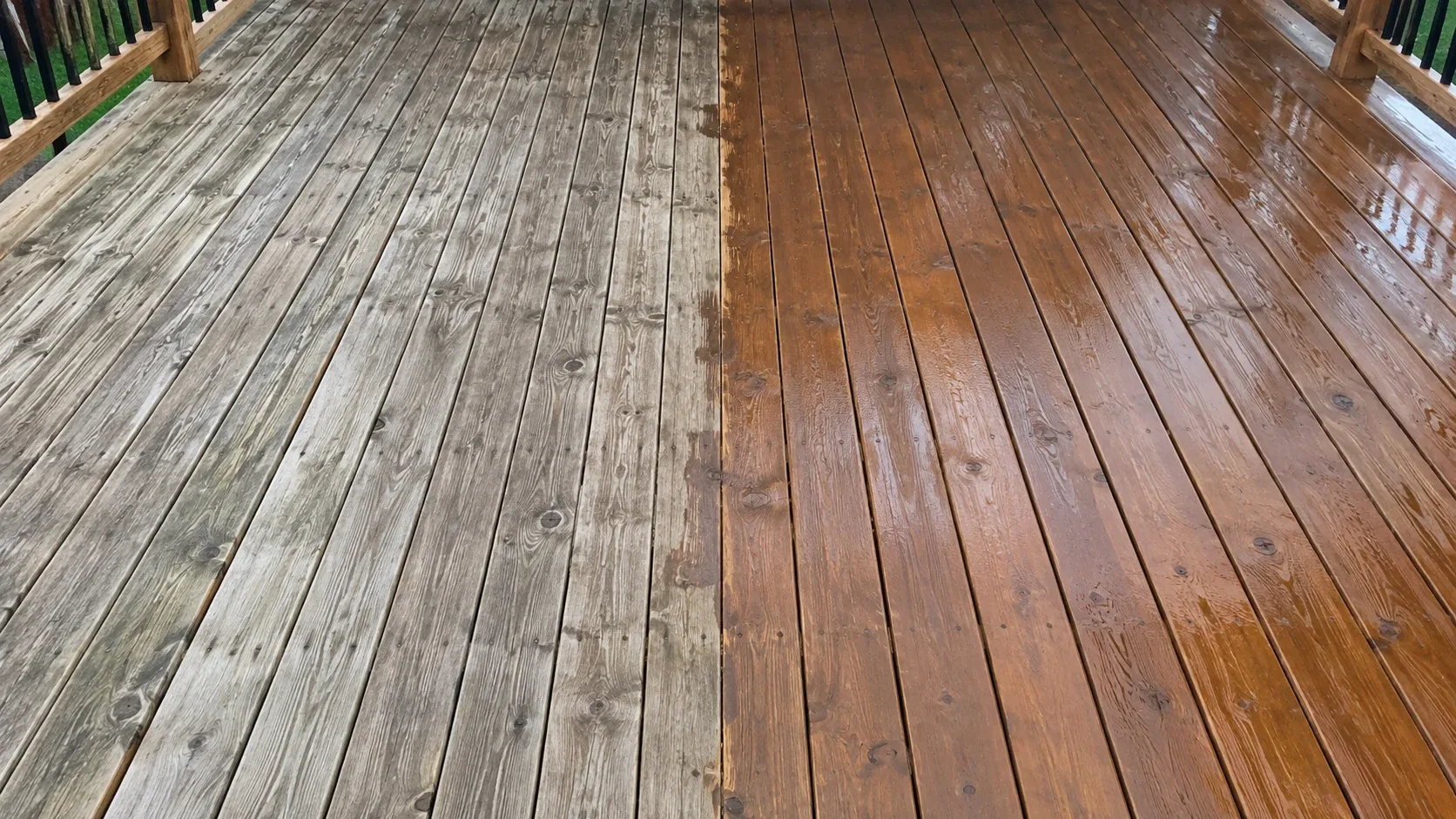
Cleaning, brightening, sanding where the boards need it, then a penetrating finish built to survive a Cuyahoga County winter. The least costly way to keep a timber deck alive.
- Footings below the frost line
- Permits and inspections handled
- Written scope before we start
Deck Staining and Sealing planning range for Lakewood
Typical price range
From:$1,000To:$1,600
- Clean and stain, semi transparent$1,000–$1,600
Planning range, not a quote. It assumes a typical deck; very tall decks and hard access need a site visit before anyone can give a firm price.
Cleveland Custom Decks plans deck staining and sealing in Lakewood, OH. Staining and sealing only last when wood moisture, surface preparation and weather timing are right.
Prepare the wood before choosing the finish
The scope should identify cleaning, stripping where needed, sanding, board and fastener repairs, moisture condition and the selected product. A coating cannot solve rotten wood or a surface that stays wet.
Choose a weather window and maintenance plan
Review shade, tree debris, drainage and sun exposure before selecting a transparent, semi-transparent or solid finish. The work should include drying time and a realistic maintenance interval.
What changes for deck staining and sealing in Lakewood
Lakewood has dense pre-war lots, small rear yards and homes close to their neighbors. On a small lot, a few inches of footprint, height or access can change setbacks, neighbor clearances and how material reaches the yard.
Lakewood's Housing and Building department issues permits for new construction, additions, alterations and repairs, and reviews plans against state and local codes before work begins. For this address, the first useful decision is to measure the usable footprint and the access route first, then confirm with the department which permit and plan documents the scope needs.
Research checkpoint for this Lakewood project
Moisture and shade determine whether a finish bonds and how soon it needs attention. In Lakewood, that concern meets a specific local condition: dense pre-war lots, small rear yards and homes close to their neighbors. This changes the questions that belong in the first site visit.
Assess drying and surface condition at the address before setting the product and schedule. The page research therefore asks one project-specific question: Does the proposed size and height fit the lot, and how will material reach the back yard?
Local source: Lakewood Housing and Building. Checked October 11, 2026.
Questions for the first site visit
- Is the wood dry and sound enough for finish?
- What causes moisture or debris to stay on the deck?
- Which finish gives the right balance of look and maintenance?
- Does the proposed size and height fit the lot, and how will material reach the back yard?
Why homeowners pick Cleveland Custom Decks
Footings below the frost line
Cuyahoga County ground freezes and thaws through a long lake effect winter. Every post we set lands on a poured footing below the local frost depth, which is what keeps a deck level through a decade of heave and thaw.
Permits and inspections handled
We work out which department your address answers to, pull the permit, meet the inspector and hand you the signed card. An unpermitted deck becomes your problem the day you sell the house.
Written scope before we start
Materials, framing spec, hardware, timeline and price in writing before anybody swings a hammer. No verbal change orders.
Deck Staining and Sealing questions we get asked
Can a brand new deck be sealed right away?
No, and rushing this step is one of the more common mistakes we see homeowners make on their own. Pressure treated lumber leaves the mill still carrying moisture from the treatment process, and sealing over that traps it in and shortens the life of the finish considerably. We generally hold off for two to four months, checking with a water test before putting anything on the boards. Cedar and kiln dried lumber dry out faster and can often take a finish sooner.
What actually separates a sealer from a stain?
A clear sealer blocks moisture well but does almost nothing to stop UV damage, so the wood still fades to grey, just more gradually than if left bare. A semi transparent stain adds pigment, and that pigment is specifically what fights UV, which is why the colour holds so much longer. A solid stain goes further still, behaving essentially like paint and covering the grain entirely. For this climate, semi transparent is where most homeowners land, and where we usually steer people.
Do I need a permit for a low deck in Lakewood?
Not always. Ohio's residential code exempts a small freestanding deck from a building permit, and only if it is 200 square feet or less, no more than 30 inches above grade, not attached to the house and not serving an exit door, which can be a meaningful saving for a modest ground level platform. Anything larger or taller, or any deck attached to the house, does need a permit through the city's Housing and Building division, submitted through the CitizenServe portal, and zoning rules apply either way.
How do I know if my Lakewood lot can fit the deck I want?
Most Lakewood lots run close to a tenth of an acre, considerably smaller than a typical outer suburb lot, and many carry a detached garage close to the rear property line. We measure the actual usable footprint at the site visit, including required setbacks, before designing anything, since the available space here is a real constraint rather than a starting assumption.
What should be checked before hiring deck staining and sealing in Lakewood?
Measure the usable footprint and the access route first, then confirm with the department which permit and plan documents the scope needs. The builder should also confirm the scope, existing condition and the approval route before work starts. Assess drying and surface condition at the address before setting the product and schedule.