
Cleveland, OH and Greater Cleveland
Wood Decks in Cleveland, OH
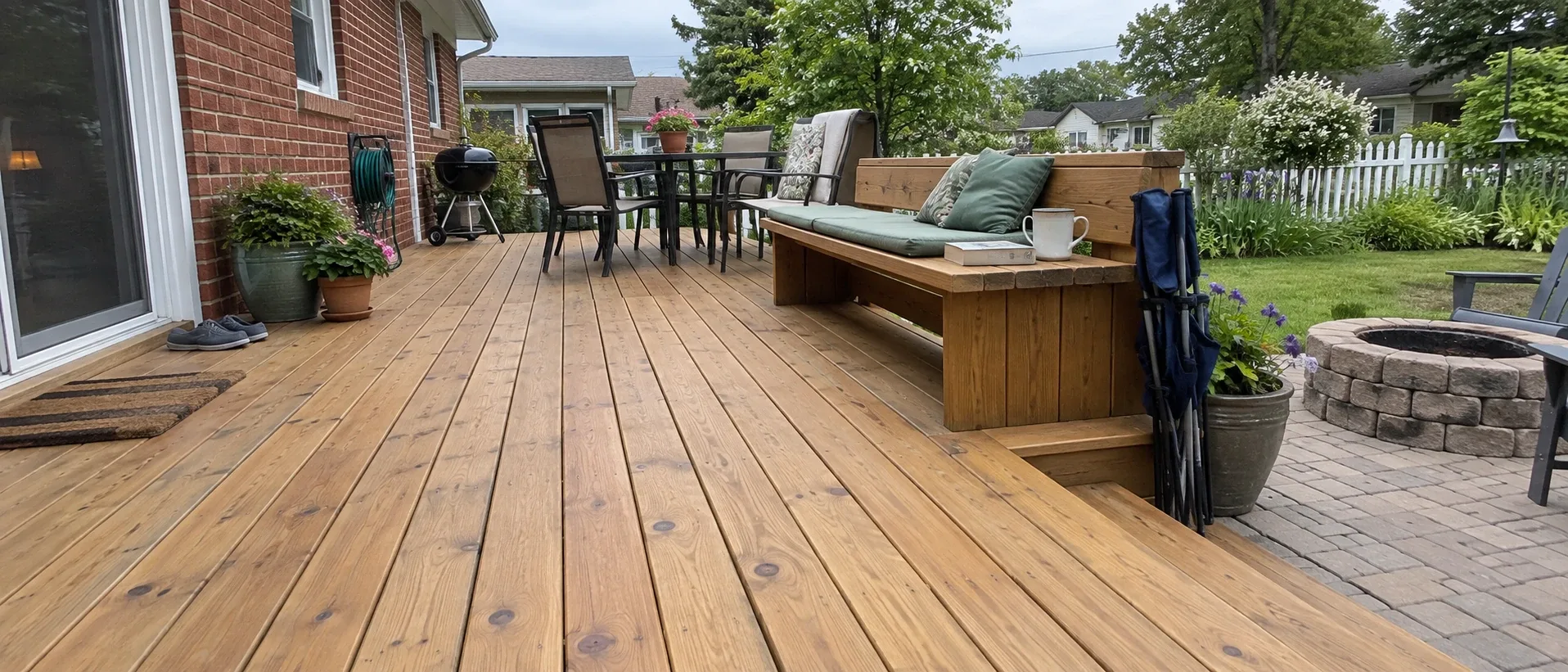
Real wood decks in pressure treated pine and cedar, framed properly and finished so they survive a Cuyahoga County winter. The most deck you can buy for the money, as long as somebody seals it.
- Footings below the frost line
- Permits and inspections handled
- Written scope before we start
Cleveland Custom Decks builds pressure treated pine and cedar decks across Cleveland and Greater Cleveland, framed on poured footings and finished so they earn back the lower material cost over the years, rather than needing to be pulled apart early.
Real wood remains the most deck for the least money on day one. The honest part of that sentence is what happens after handover, because a wood deck asks for regular attention that a composite one does not, and we would rather tell you that before you order the lumber than after the first summer.
The two materials we build in
Pressure treated pine
Southern yellow pine treated with a preservative that resists rot and insect damage, the framing material behind almost every deck regardless of what surface sits above it. As a walking surface it is the most affordable option by a wide margin, and correctly sealed it commonly lasts fifteen to twenty five years. Left unsealed in this climate, expect closer to eight to twelve before boards need serious attention.
Cedar
Western red cedar carries natural oils that resist rot and insects without chemical treatment, so it is lighter to handle and takes a semi transparent stain more evenly than pine. It costs meaningfully more and is a softer wood, which means furniture and grills leave marks pine tolerates better. Cedar suits a deck that sits as a visible extension of the house rather than a purely functional platform at the back of the property.
Framing a wood deck properly
Footings past the frost line
Every post lands on a poured footing set below the frost depth Cleveland’s own building code calls for, roughly 42 inches, with a galvanised standoff base lifting the post end grain clear of the pad. Skipping this step is the single most common cause of a heaved, out of level deck we are asked to correct.
Joist spacing for a solid timber surface
Timber decking can run on a wider joist spacing than composite requires, which keeps material cost down, but the spacing still has to match the board thickness and span rating rather than defaulting to whatever a crew finds convenient.
Ledger and flashing done right
The ledger board, where the deck meets the house, is through bolted or structurally screwed at the correct spacing and capped with flashing and a self adhering membrane behind it. Water finding its way behind an unflashed ledger is one of the most consistent causes of structural deck failure on record, and it is entirely avoidable.
Keeping a wood deck alive here
The sealing cycle that actually matters
Clean, brighten and reseal on a two to three year rhythm, tuned to how much sun and shade the deck gets rather than a fixed calendar date. A shaded deck under mature tree cover, common across many of the older, leafier Cleveland suburbs, holds moisture longer and often needs attention sooner than an open, sunny one. Full detail is on the staining and sealing page.
What happens when the cycle is skipped
Bare wood left through even one Cleveland winter greys and starts to check. Left through two or three, boards cup, screws back out and the surface becomes genuinely unsafe underfoot in places, well before the frame itself has failed. At that point repair or replacement becomes the conversation rather than a simple reseal.
Hardware that will not rust out first
Every fastener and connector we use is rated for the preservative chemicals in modern treated lumber, since older, incompatible hardware corrodes far faster than the wood around it once trapped moisture gets involved, which is common given how many months of the year see measurable rain here.
Where a wood deck fits best
Tighter budgets
For a family prioritising outdoor space now over the lowest lifetime cost, pressure treated pine remains the most square footage per dollar of any surface we install.
Older, character driven homes
On the pre war housing stock common through the city and the inner ring suburbs, a stained cedar or pine deck often reads more honestly against the original architecture than a composite surface would.
Anyone who genuinely enjoys the upkeep
Some homeowners simply prefer the ritual of caring for a wood deck, and the result, kept up, looks and feels different underfoot to composite in a way plenty of people still prefer.
Building the rest of the structure
A wood surface sits on the same footings, framing and ledger detail described on the full deck building page, and pairs with timber, aluminium, cable or glass railings depending on the look you are after.
Deck cost in Cleveland, OH
Plug in the dimensions and finish to see the installed cost range, no phone call required.
Your estimated cost range
$20,500$31,300
- Labour and installation$9,500
- Decking boards$6,500
- Railings$4,000
- Framing and hardware$3,000
- Footings and concrete$2,000
- Permit and disposal$1,000
Consider this a starting point rather than a quote. A no cost site visit and measurement comes first, and you get a locked in written price before any date is reserved.
Why homeowners pick Cleveland Custom Decks
Footings below the frost line
Cuyahoga County ground freezes and thaws through a long lake effect winter. Every post we set lands on a poured footing below the local frost depth, which is what keeps a deck level through a decade of heave and thaw.
Permits and inspections handled
We work out which department your address answers to, pull the permit, meet the inspector and hand you the signed card. An unpermitted deck becomes your problem the day you sell the house.
Written scope before we start
Materials, framing spec, hardware, timeline and price in writing before anybody swings a hammer. No verbal change orders.
Wood Decks questions we get asked
How long does a wood deck last in Cleveland?
Pressure treated pine that is cleaned and resealed on roughly a two to three year cycle commonly reaches fifteen to twenty five years before the frame needs real attention. Skip that cycle through even one or two Cleveland winters and the timeline shortens considerably, since standing water and repeated freezing are what actually break a board down, not simple age.
Cedar or pressure treated pine?
Pressure treated pine is the more affordable option and takes stain and paint well once it has weathered a season. Cedar costs more, resists rot and insects on its own, and takes a semi transparent stain more evenly, which is why it tends to go on decks that sit close to the house and stay visible from inside rather than a purely utility platform at the back of the lot.
Does a wood deck need a permit in Cleveland?
Yes, the requirement is the same regardless of surface material. What differs by material is the framing spec: a wood surface can run on standard joist spacing where a composite surface cannot, which is part of why a straightforward timber deck is often quicker to get through review than a composite one carrying the same footprint.
What does 'ground contact rated' lumber mean?
It is pressure treated lumber carrying a higher retention of preservative, required for any member that sits within roughly six inches of soil or is embedded in concrete, such as a post base. Using standard above ground rated lumber for a post that sits in or near soil is a common corner cut on a low bid job, and it is one of the first things we check when we are called out to a failing deck.
Can a wood deck be converted to composite later?
Sometimes, and it depends entirely on the joist spacing already in place. A frame built for timber decking is often spaced too wide for composite's requirements, so converting later can mean sistering in extra joists rather than a simple board swap. If there is any chance you will want composite in a few years, it is worth saying so at the design stage, because the frame is cheap to get right the first time and expensive to retrofit.